
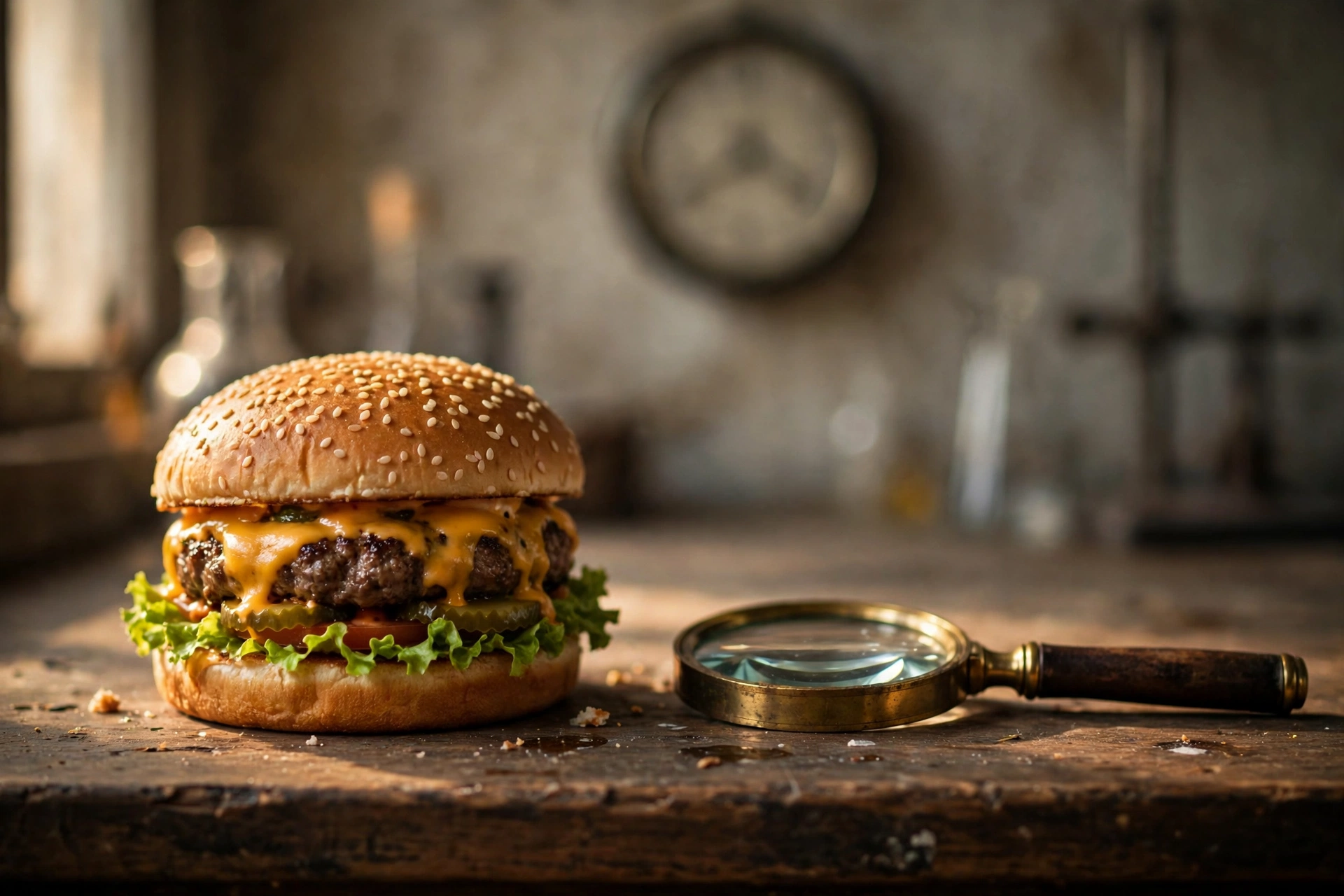
Why Don’t McDonald’s Burgers Rot?
McDonald’s burgers don’t rot because they dry out before mold and bacteria can grow. The thin patty loses its moisture as steam on a scorching-hot griddle, the toasted bun sheds even more, and dry indoor air finishes the job. No moisture means no mold. It’s dehydration — not some chemical conspiracy.
You’ve seen the photos. A McDonald’s hamburger from 1999 that looks like it was bought yesterday. No mold, no smell, no decay — just a sad little burger sitting in a closet for a decade and a half. It freaks people out. And honestly? I get it. Food is supposed to rot. That’s the deal. So when a burger refuses to play by the rules, it’s natural to wonder what’s hiding in that patty. Here’s the thing, though: I looked into this, and the answer is way less sinister than the internet wants you to believe.
It’s Not Preservatives — It’s Dehydration
Here’s the one-sentence version: a McDonald’s burger doesn’t rot because it dries out faster than mold can set up shop. Mold and bacteria need water to live. Take the water away, and they starve.
Think about what a McDonald’s hamburger actually is. The patty is thin — really thin. That gives it a huge surface area compared to its volume, which means moisture escapes fast. It’s slapped onto a grill hot enough to flash that moisture off as steam. The bun gets toasted, which drives out even more water. By the time the burger hits your tray, it’s already pretty dry.
Then it sits out. Most indoor air hovers around 40% humidity, which quietly keeps pulling water from the burger for hours. Within a day, the thing is basically jerky.
McDonald’s has said this itself: without sufficient moisture — either in the food itself or the environment — bacteria, mold, and the decomposition they cause are unlikely. Food scientist Dr. Keith Warriner of the University of Guelph backs them up: the patty loses water as steam during cooking, toasting dries the bun, and the finished burger is “fairly dry” from the start.
And here’s the kicker — there’s nothing uniquely McDonald’s about it. Leave a slice of bread, a cracker, or a strip of beef jerky in a dry room and you get the same result. A homemade burger with the same thin patty would do exactly the same thing. Dr. Warriner said as much: run the experiment with a homemade burger of similar moisture content under similar conditions, and you’d probably get similar results.
The “Mummy Burgers” That Started It All
Yes, the stories are real. People really have kept McDonald’s burgers for years — one for 14 years — and the burgers genuinely look bizarrely unchanged.
The most famous one belongs to David Whipple of Logan, Utah. In July 1999, he bought a McDonald’s hamburger for a demonstration about enzymes. He used it for a month, then forgot about it — coat pocket, paper sack, receipt and all. The coat went into his truck, then into a closet. His wife found it a year or two later. It looked… the same.
Whipple kept it. By 2013 — fourteen years on — the burger was a minor celebrity, featured on “The Doctors,” still intact. No mold, no rot, barely a smell. (The pickles, it’s worth noting, disintegrated. Even pickles have their limits.)
Others followed. Nutritionist Karen Hanrahan bought a Happy Meal and photographed it for six months: barely any change. TikTokers now wave around 20-year-old burgers and fries that look like they could’ve been bought last week.
Creepy? Sure. But look closely at those photos — like McDonald’s itself suggests — and the burgers aren’t “fresh.” They’re dried out and dehydrated. Mummified, really.
The Plot Twist: Thicker McDonald’s Burgers Do Rot
Here’s the part that never goes viral: thick McDonald’s burgers absolutely rot. Trap the moisture in and mold shows up right on schedule.
The best test came from J. Kenji López-Alt’s “Burger Lab” at Serious Eats. He left McDonald’s burgers and homemade burgers out side by side. The result? The small burgers didn’t rot — either of them. Homemade or McDonald’s, size was all that mattered.
But the quarter-pounders? Both the McDonald’s one and the homemade one got funky. A thicker patty holds onto moisture, and mold moves right in. Same deal with a sealed bag: put a regular McDonald’s burger in one, trap the humidity, and it rots like anything else.
Students at the University of Nottingham ran their own version in 2013 and landed in the same place: under identical conditions, a McDonald’s burger and a homemade burger decomposed at similar rates. The McDonald’s one just dried out faster.
McDonald’s own statement concedes the point: “In the right environment, our burgers, like most other foods, could decompose.”
So What’s Actually in the Patty?
In the US, a McDonald’s beef patty is 100% USDA-inspected beef, seasoned with salt and pepper on the grill. No preservatives. No fillers.
That’s McDonald’s official line, and food scientists haven’t found a reason to doubt it. The patties are, chemically speaking, about as boring as the beef in your grocery store.
Now, the full burger is a different story — buns have dough conditioners, and the fries have their own long ingredient list. But the famous no-rot photos are about the burger patty, and the patty is clean. That’s why the “it’s full of chemicals” theory falls apart. The explanation is physics, not chemistry.
You Could Do This in Your Own Kitchen (Please Don’t)
Make a thin patty, cook it on a screaming-hot pan, toast the bun, and leave the burger out — your homemade burger would mummify too.
Humans have preserved food by drying it for thousands of years. Jerky, biltong, hardtack, dried beans — same trick. A McDonald’s hamburger is accidentally a masterclass in water activity: low moisture in, low moisture out, nothing left for microbes to eat.
So the next time one of those mummy-burger photos crosses your feed, you can skip the panic. It’s not that the burger is indestructible. It’s that it’s a desert — and mold can’t grow in a desert.
Frequently Asked Questions
Do McDonald’s burgers have preservatives in them?
In the US, no — the beef patties are 100% USDA-inspected beef with just salt and pepper. The buns and fries contain other ingredients, but the patty itself is preservative-free.
Why doesn’t a McDonald’s burger grow mold?
It dehydrates before mold can grow. Mold needs moisture, and the thin patty sheds its water within hours of cooking. No water, no mold — the same reason beef jerky and crackers last.
Is it true someone kept a McDonald’s burger for 14 years?
Yes. David Whipple bought one in Logan, Utah in July 1999, forgot it in his coat pocket, and fourteen years later it looked nearly identical. The pickles were the only casualty.
Do McDonald’s fries rot?
Same dehydration story — thin, cooked dry, they lose moisture fast and resist mold. Seal them somewhere humid and they’ll break down like any other food.